Meza
Meza is MediaWiki EZ Administration
For the past couple years, we've been the primary maintainer and have successfully pushed our contributions upstream to NASA.
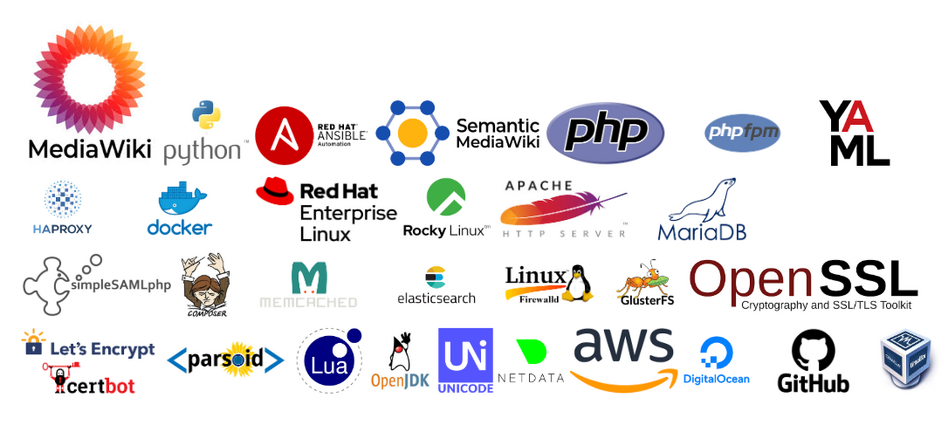
Meza - the Multi-Tenant SaaS Platform for wiki[edit]
Meza is a multi-tenant SaaS platform for MediaWiki in several key ways:
Multi-Tenancy Architecture[edit]
1. Multiple Wiki Instances Per Environment[edit]
Meza allows you to run multiple independent wikis ($wikiId) within a single MediaWiki installation:
# Create multiple wikis in the same environment
meza create wiki wiki1
meza create wiki wiki2
meza create wiki clientA
Each wiki gets:
- Separate database (e.g.,
wiki_wiki1,wiki_wiki2) - Isolated configuration via
LocalSettings.phpper wiki - Shared codebase (MediaWiki core + extensions)
- Shared infrastructure (web servers, Elasticsearch, etc.)
2. Environment Isolation[edit]
Meza supports multiple environments (dev, staging, production) with complete separation:
/opt/conf-meza/
├── secret/
│   ├── prod/           # Production environment secrets
│   ├── staging/        # Staging environment secrets
│   └── dev/            # Development environment secrets
└── public/
    ├── prod/           # Production public config
    ├── staging/        # Staging public config
    └── dev/            # Development public config
Each environment can host multiple wikis with different:
- Inventory files (different servers)
- Secrets (passwords, API keys)
- Configuration overrides
3. Configuration Hierarchy (Tenant Customization)[edit]
The configuration system allows per-wiki customization while sharing common defaults:
# From LocalSettings.php generation
1. Core defaults: config/defaults.yml
2. OS-specific: config/RedHat.yml or config/Debian.yml
3. Public environment: /opt/conf-meza/public/<env>/public.yml
4. Secret environment: /opt/conf-meza/secret/<env>/secret.yml
5. Per-wiki overrides: /opt/conf-meza/secret/<env>/<wikiId>/override.php
This means each wiki tenant can have:
- Custom logo, colors, skin
- Different enabled extensions
- Unique user permissions
- Custom namespaces
- Separate access controls (Lockdown extension)
[edit]
Shared:
- Web servers (Apache/Nginx)
- PHP-FPM pools
- Elasticsearch cluster (with per-wiki indices)
- MediaWiki codebase and extensions
- File storage (GlusterFS for multi-server)
Isolated per wiki:
- MySQL/MariaDB databases
- User accounts and permissions
- Content pages
- File uploads (
/opt/data-meza/<env>/wikis/<wikiId>/) - Search indices (CirrusSearch creates
wiki_<wikiId>_*indices)
5. API and REST Access Per Tenant[edit]
Each wiki gets its own API endpoint:
https://yourdomain.com/wiki1/api.php
https://yourdomain.com/wiki2/api.php
https://yourdomain.com/clientA/api.php
And REST API:
https://yourdomain.com/wiki1/rest.php/v1/
https://yourdomain.com/wiki2/rest.php/v1/
6. Resource Management[edit]
Meza provides deployment locks to prevent resource conflicts:
# Deploy locks prevent concurrent deployments
/opt/data-meza/env-{env}-deploy.lock

# Check if environment is deploying
meza deploy-check <env>  # 0=available, 1=deploying
7. Scalability Features[edit]
Horizontal scaling:
- Multi-server support via inventory files
- Load balancing with HAProxy
- Distributed file storage with GlusterFS
- Elasticsearch cluster for search
Vertical scaling:
- Configurable PHP memory limits per wiki
- Database connection pooling
- ResourceLoader caching
SaaS Characteristics[edit]
| Characteristic | Status |
|---|---|
| Multi-Tenancy | ✅ Multiple wikis (tenants) on shared infrastructure |
| Isolation | ✅ Separate databases, configs, and data per tenant |
| Self-Service | ✅ meza create wiki command for instant provisioning
|
| Centralized Management | ✅ Single CLI (meza) manages all wikis
|
| Shared Updates | ✅ Deploy once, all wikis get updates |
| Elastic Resources | ✅ Add/remove wikis without affecting others |
| Access Control | ✅ Per-wiki authentication and authorization |
Example: Hosting Multiple Clients[edit]
# Client A gets their own wiki
meza create wiki clientA

# Configure Client A's custom branding in:
# /opt/conf-meza/secret/prod/clientA/override.php

# Client B gets their own wiki
meza create wiki clientB

# Both share the same MediaWiki installation, extensions, and servers
# But have completely isolated data, users, and customization
What Makes It Different from Traditional Hosting?[edit]
| Approach | Description |
|---|---|
| Traditional | Each wiki = separate VM + separate MediaWiki installation + separate maintenance |
| Meza SaaS | Multiple wikis = shared infrastructure + centralized updates + isolated data |
This is true multi-tenancy - the defining characteristic of SaaS platforms like Salesforce, GitHub, or Slack, where many customers share the same application infrastructure but have isolated data and customization.
Benefits[edit]
- Cost Efficiency: Shared infrastructure reduces server costs
- Easy Management: Single deployment updates all wikis
- Rapid Provisioning: New wikis created in seconds
- Scalability: Add capacity without disrupting existing wikis
- Consistency: All wikis run the same tested MediaWiki version
- Flexibility: Per-wiki customization without affecting others
Use Cases[edit]
- Department Wikis: Each department gets their own wiki with custom permissions
- Client Portals: Separate wiki for each client with isolated data
- Project Spaces: Individual wikis for different projects or teams
- Multi-tenant Hosting: Offer MediaWiki hosting to multiple organizations
- Development Environments: Separate dev/staging/prod wikis for testing
More[edit]
Read more about Meza

